
Fire, … it’s good to have room for new things

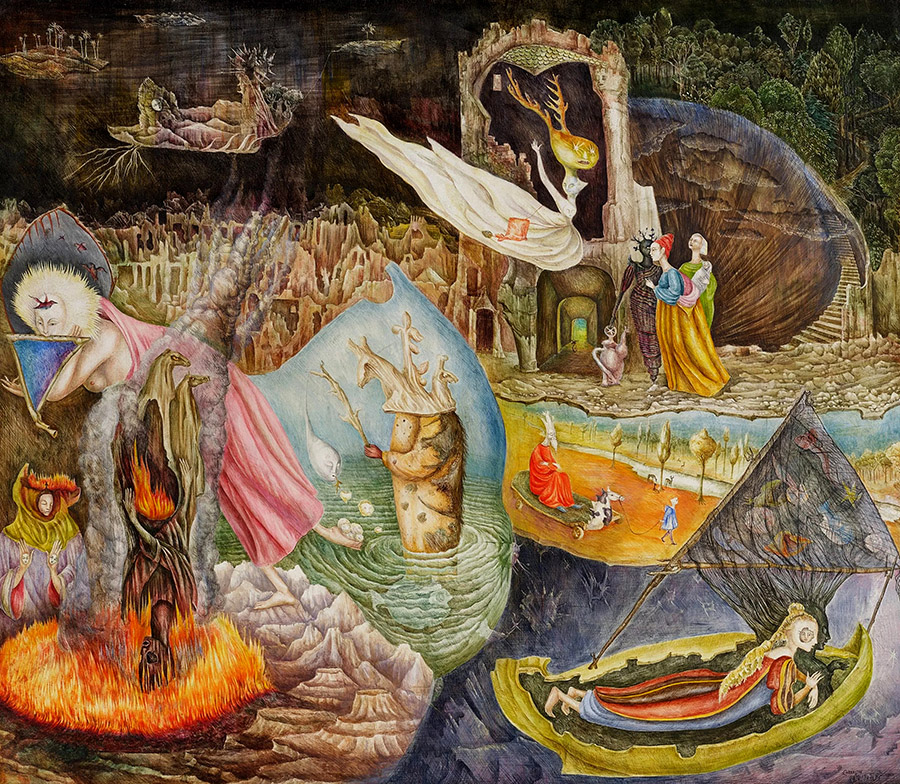
Even in a large city, the streets after a certain advanced hour of night are relatively still. What one hears and sees are apparitions and sounds to which both our eyes and our ears have long since grown accustomed. There are none of the usual sounds. People are at home, sitting around the cozy family table, or else in bars hunkered over their beers and political discussions, or in the concert hall, reverently listening to the pieces of music being performed, or at the theater, following the suspenseful goings-on upon the brightly lit stage, or else they are standing in pairs, or in groups of three or seven on some melancholy street corner, delving into profundities, or else perhaps aimlessly walking in some direction or other. “Hey there, car!” another cries out, and somewhere there might be a poet buried in his isolated room, drunkards wandering in wretched bliss from one still to another, bawling and harassing the passersby; perhaps a horse pulling a hackney cab is collapsing somewhere, a woman fainting, a scoundrel being apprehended by the always vigilant and safety-restoring police force—and suddenly someone shouts: “Fire!” Quite close by, it seems, a fire has broken out. People were just standing around, indecisive and bored, about to accuse the hour of lacking all interest and in any case starting to feel chilled, and suddenly here’s this great novelty being presented, something unexpected to kindle our enthusiasm. Everyone lurches forward and without realizing it has already begun a conversation with whoever happens to be standing alongside, cheeks are glowing, and now people are even starting to leap and run. They’re suddenly doing something they haven’t tried in a good two years. All at once the world appears changed, expanded, thicker, and more tangible.

A metropolis is a giant spiderweb of squares, streets, bridges, buildings, gardens, and wide, long avenues. When a fire breaks out, only the neighbors closest to the scene of the fire know of the conflagration. Indeed, in a huge city like this there can be three, four, or even five large fires in the course of a single night, far apart from one another, each one representing a disaster in its own right, an “event,” without one having even the slightest impact on the others: five suspenseful chapters of a novel, each of them self-contained, without links to the other. A metropolis is a wave-filled ocean that for the most part is still largely unknown to its own inhabitants, an impenetrable forest, an opulent, overgrown, huge, forgotten, or half-forgotten park, a thing that has been built up too extensively for it to ever again be oriented within itself. But now dozens of people are hurriedly racing to the scene of the fire. They now know approximately where the blaze is.

And now you turn a corner and the fire is right in front of you, it looks as if it wants to leap forward to greet you; an entire street is brightly, garishly lit up by it, it resembles a sunset in the distant south, ten evenings ablaze, a host of suns setting in unison. You see the façades of buildings looking like pale-yellow paper, and the bright red glow of the fire approaches, a thick, glowing, wounded red, and beside it the street lanterns look like feebly burning damp matches. And cries ring out. It seems as if trumpets are sounding everywhere, but this is a false impression, everything is relatively quiet, it’s just that you are running, and beside you, before you and behind, others are now loping as well, and hackney cabs are trotting past, and the electric tram passes by. There is something ordinary about all of this, yet at the same time something incomprehensible. Suddenly everyone stops short as if standing before a fairy tale. What now appears resembles a bomb effect dreamed up by an enterprising theater director.

Continue reading “Fire, … it’s good to have room for new things”

Le Système des objets, into the domestic universe

家具変わる、 空間舞う風、 心の踊り。

The Modern Object Liberated in Function

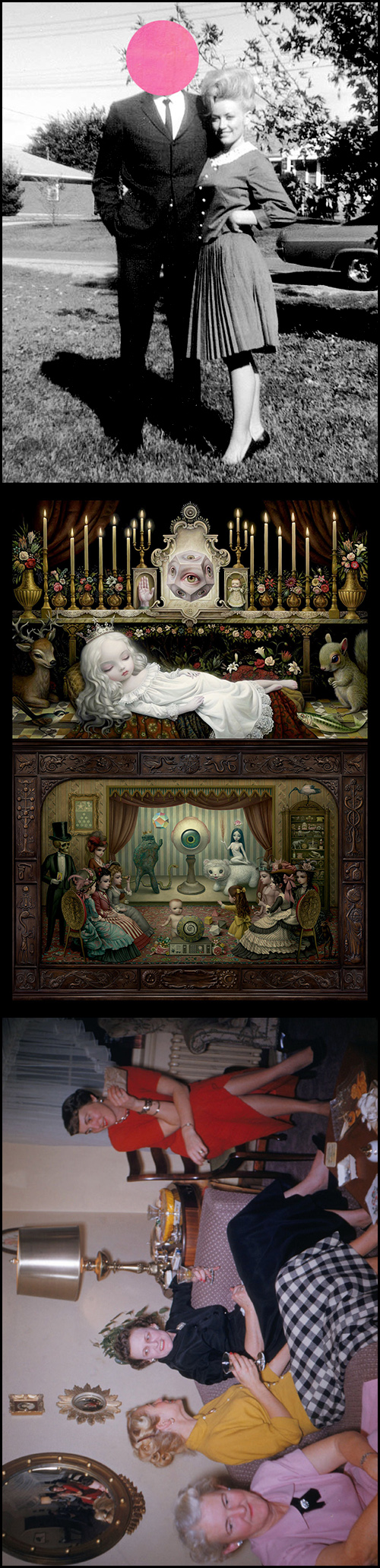
The style of furniture changes as the individual’s relationships to family and society change. Corner divans and beds, coffee tables, shelving – a plethora of new elements are now supplanting the traditional range of furniture. The organization of space changes, too, as beds become day-beds and sideboards and wardrobes give way to built-in storage. Things fold and unfold, are concealed, appear only when needed. Naturally such innovations are not due to free experiment: for the most part the greater mobility, flexibility and convenience they afford are the result of an involuntary adaptation to a shortage of space – a case of necessity being the mother of invention. Whereas the old-fashioned dining-room was heavily freighted with moral convention, ‘modern’ interiors, in their ingeniousness, often give the impression of being mere functional expedients. Their ‘absence of style’ is in the first place an absence of room, and maximum functionality is a solution of last resort whose outcome is that the dwelling-place, though remaining closed to the outside, loses its internal organization. Such a restructuring of space and the objects in it, unaccompanied by any reconversion, must in the first instance be considered an impoverishment.

The modern set of furniture, serially produced, is thus apparently destructured yet not restructured, nothing having replaced the expressive power of the old symbolic order. There is progress, nevertheless: between the individual and these objects, which are now more supple in their uses and have ceased to exercise or symbolize moral constraint, there is a much more liberal relationship, and in particular the individual is no longer strictly defined through them relative to his family. Their mobility and multi-functionality allow him to organize them more freely, and this reflects a greater openness in his social relationships. This, however, is only a partial liberation. So far as the serial object is concerned, in the absence of any restructuring of space, this ‘functional’ development is merely an emancipation, not (to go back to the old Marxian distinction) a liberation proper, for it implies liberation from the function of the object only, not from the object itself. Consider a nondescript, light, foldable table or a bed without legs, frame or canopy – an absolute cipher of a bed, one might say: all such objects, with their ‘pure’ outlines, no longer resemble even what they are; they have been stripped down to their most primitive essence as mere apparatus and, as it were, definitively secularized. What has been liberated in them – and what, in being liberated, has liberated something in man (or rather, perhaps, what man, in liberating himself, has liberated in them) – is their function. The function is no longer obscured by the moral theatricality of the old furniture; it is emancipated now from ritual, from ceremonial, from the entire ideology which used to make our surroundings into an opaque mirror of a reified human structure. Today, at last, these objects emerge absolutely clear about the purposes they serve. They are thus indeed free as functional objects – that is, they have the freedom to function, and (certainly so far as serial objects are concerned) that is practically the only freedom they have.

Continue reading “Le Système des objets, into the domestic universe”

ism, n.

A form of doctrine, theory, or practice having, or claiming to have, a distinctive character or relation: chiefly used disparagingly, and sometimes with implied reference to schism.

Etymology: Representing French -isme, Latin -ismus, < Greek -ισμός, forming nouns of action from verbs in -ίζειν, e.g. βαπτίζειν to dip, baptize, βαπτισμός the action of dipping, baptism. An allied suffix was -ισμα(τ-), which more strictly expressed the finished act or thing done, and which in some cases is the source of modern -ism. Besides its free use as a suffix forming verbs on ordinary nouns and adjectives, -ίζειν was (as mentioned under -ize suffix) affixed to national names, with the sense to act or ‘play’ the people in question, and hence to act like, do after the manner of, practise the habits, customs, or language of, side with or adhere to the party of, those people. Hence the noun in -ισμός had the sense of acting or doing like, siding with, adhesion to, or speaking like the people in question; e.g. Ἀττικίζειν to Atticize, to side with the Athenians, to use the Attic dialect; hence Ἀττικισμός, Atticism, a siding with Athens, Attic style of language, etc. The Septuagint (Esther viii. 17) and New Testament have Ἰουδαίζειν to Judaize, to live like the Jews. The derivative Ἰουδαισμός Judaism, the manner of the Jews, occurs in the Septuagint (2 Macc. ii. 21). The Latin Jūdaismus occurs in Tertullian (c200); Jūdaizāre in the Vulgate. Origen (a250) has Χριστιανίζειν to play the Christian, act the part of a Christian, practise Christian principles, and Justin Martyr (a150) has Χριστιανισμός the practice of Christians, Christianity. Hence late Latin chrīstiānizāre in Tertullian, chrīstiānismus in Tertullian, Augustine and Jerome. On the type of these, -ισμός, -ismus, became the ordinary ending to form names of religious, ecclesiastical, or philosophical systems; thus pāgānismus is cited by Du Cange from a council of 744. The Old French representation of this, paienisme, paienime, painime (12th cent.) is probably the earliest French example, and appears in English as painime, painim in the 13th cent. But, in the modern form and sense, Judaisme is found a1500, and christianisme (a1500 in French) c1525 in English. From the 16th cent. such formations are numerous.

1680 E. Pettit Vision of Purgatory 46 He was the great Hieroglyphick of Jesuitism, Puritanism, Quaquerism, and of all Isms from Schism. 1756 Monthly Rev. 14 359 Arianism, Socinianism, Arminianism, or any other ism. 1789 H. Walpole Lett. 4 Nov. Alas! you would soon squabble about Socianism, or some of those isms. 1808 R. Southey Select. from Lett. (1856) II. 182 It has nothing to do with Calvinism nor Arminianism, nor any of the other isms. 1811 T. J. Hogg Life Shelley (1858) I. 373 He is nothing,—no ‘ist’, professes no ‘-ism’ but superbism and irrationalism. 1820 R. Polwhele Introd. Lavington’s Enthus. Method. & Papists 118 It has no connection with Methodism, or Puritanism, or any ism or schism. 1820 T. Carlyle Let. to M. Allen Oct. I expect much pleasure from talking over old bygone things, from discussing Spürzheimism, Whiggism, Church of Englandism, and all other imaginable ‘isms’. 1840 Fraser’s Mag. 21 702 All the untidy isms of the day shall be dissipated. 1843 T. Carlyle Past & Present ii. xv. 158 This is Abbot Samson’s Catholicism of the Twelfth Century;—something like the Ism of all true men in all true centuries, I fancy. 1864 J. R. Lowell Rebellion in Prose Wks. (1890) V. 138 That class of untried social theories which are known by the name of isms. 1884 Kendal Mercury 3 Oct. 4/7 The principles on which Education Acts are based, irrespective of isms and creeds. 1928 G. B. Shaw Intell. Woman’s Guide Socialism lxxxiii. 447 The proletarian Isms are very much alike. 1968 S. C. Hutchison Hist. Royal Acad. xvii. 183 He saw no place in art for abstractions and ‘isms’ and had a very low opinion of their adherents. 1974 Listener 14 Feb. 220/1 Impressionism became the most successful ‘ism’ in the history of art.

初め無き
終わり亦無き
我は無し

(Beginning is nothing
Ending is also nothingness
I am nothingness.
)

Abnormalism, abolitionism, aboriginalism, absenteeism, absolutism, academicalism, academicism, accidentalism, achromatism, acosmism, acrobatism, acotism, actinism, activism, Adamitism, adiaphorism, adoptianism, Adopttionism, adventurism, aeroembolism, aerotropism, aestheticism, Africanism, ageism, agnosticism, agrarianism, Albigensianism, albinism, albinoism, alcoholism, algorism, alienism, allelomorphism, allotropism, alpinism, altruism, amateurism, Americanism, ametabolism, amoralism, amorism, amorphism, anabaptism, anabolism, anachronism, anagrammatism, anarchism, anastigmatism, androdioecism, andromonoecism, aneurism, Anglicanism, anglicism, Anglo-Catholicism, aniconism, animalism, animatism, animism, annihilationism, antagonism, anthropomorphism, anthropomorphitism, anthropopathism, anthropophuism, anthropopsychism, antichristianism, anticivism, anticlericalism, antidisestablishmentarianism, anti-federalism, anti-Gallicanism, anti-Jacobinism, antinomianism, antiochianism, antiquarianism, anti-Semitism, antisepticism, antisocialism, antitheism, antitrinitarianism, antivaccinationism, antivivisectionism, anythingarianism, apheliotropism, aphorism, apism, aplanatism, apochromatism, apogeotropism, apoliticism, Apollinarianism, apostolicism, apriorism, Arabism, Aramaism, Arcadianism, archaicism, archaism, Arianism, aristocratism, Aristotelianism, Aristotelism, Arminianism, asceticism, asepticism, Asiaticism, aspheterism, asteism, asterism, astigmatism, asynchronism, asystolism, atavism, atheism, athleticism, Atlanticism, atomism, atonalism, atropism, Atticism, attorneyism, Augustinianism, Australianism, authorism, authoritarianism, autism, autochthonism, autoeroticism, autoerotism, automatism, automobilism, automorphism, autotheism, avant-gardism, Averrhoism, Averroism,

Continue reading “ism, n.”

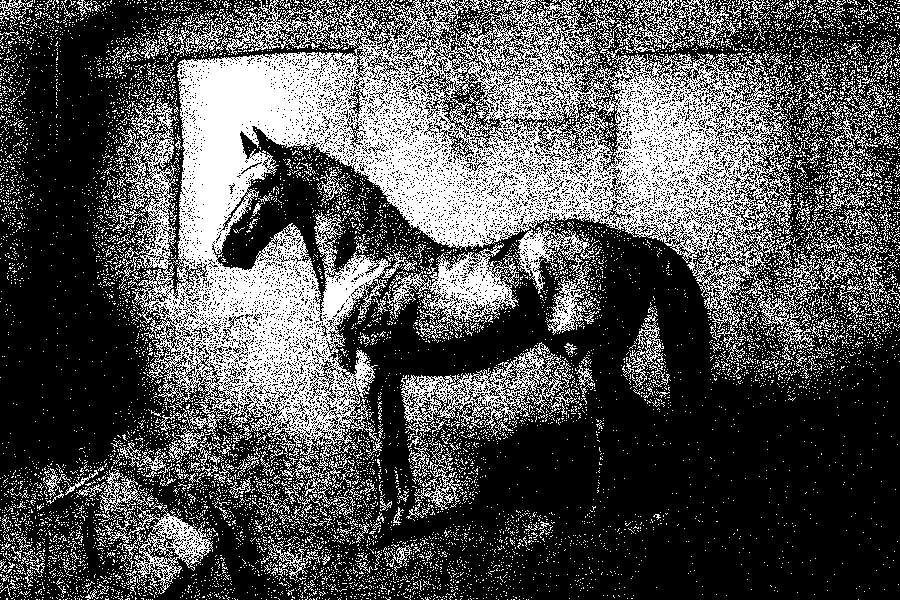
廃屋の馬

荒屋に馬 忘れられた場所 静寂の中, 足音に声 馬のみ耳を垂れ 静かな夜, かすかな囁き 聴きわたる静寂に 遠い思い出, 壁と床 きしむ余韻に 馬の立つ, 馬は知る 忘れられた場所を 時の果てまで

il y avait autrefois une vieille maison abandonnée, perdue dans les bois, que personne ne visitait plus. la porte de la maison grinçait dans le vent, le toit était fissuré et laissait passer la pluie. pourtant, dans cette maison abandonnée, il y avait un secret. un cheval y vivait, silencieux et immobile, gardant ce lieu oublié depuis des années. un soir, alors qu’il faisait noir, un promeneur passa par cette maison et entendit un murmure. il regarda autour de lui, mais il n’y avait personne d’autre que lui et le cheval. le cheval dressa les oreilles et écouta attentivement. il était le seul à percevoir les murmures dans la maison. il se souvenait des temps passés, des voix et des pas qui avaient parcouru la maison. mais maintenant, tout était silencieux. au fil des ans, la maison avait continué à se détériorer et à pourrir, mais le cheval restait, sans savoir pourquoi il devait rester là. cependant, il continuait à veiller sur cette maison, dans l’obscurité, dans le silence et la solitude.

A Man in Love, … next year I shall plant some Tomatoes

Walking down a narrow street one evening, I stole a melon. The fruit seller, who was lurking behind his fruit, caught me by the arm.

Miss, I’ve been waiting for a chance like this for forty years. For forty years I’ve hidden behind this pile of oranges in the hope that somebody might pinch some fruit. And the reason for that is this: I want to talk, I want to tell my story. If you don’t listen, I’ll hand you over to the police.

I’m listening, I told him.

Continue reading “A Man in Love, … next year I shall plant some Tomatoes”

Her on þisan geare .. Ælfgar biscop se ælmesfulla forðferde on Cristesmæsseuhtan … Feowertig daga ær Criste acennisse, þæt is ær geolum [v.r. gyhhelum]

OE Phoenix 37 Wintres ond sumeres wudu bið gelice bledum gehongen. OE Beowulf 1128 Hengest ða gyt wælfagne winter wunode mid Finne. OE Ælfric De Temporibus Anni (Cambr. Gg.3.28) (2009) x. 94 Durh his [sc. of zephyr] blæd acuciað ealle eorðlice blæda.., & se wind towyrpð & ðawað ælcne winter. OE Anglo-Saxon Chron. (Tiber. B.iv) anno 1021 Her on þisan geare..Ælfgar biscop se ælmesfulla forðferde on Cristesmæsseuhtan.

OE Rule St. Benet (Corpus Cambr.) viii. 32 On wintres timan [a1225 Winteney wintres tyman], þæt is fram þan anginne þæs monðes, þe is nouember gehaten, oþ eastran..on þære eahteþan tide þære nihte is to arisenne. OE Genesis B 370 And moste [ic] ane tid ute weorðan, wesan ane winterstunde. OE King Ælfred tr. Boethius De Consol. Philos. (Bodl.) (2009) I. xxi. 285 On sumera hit bið wearm and on wintra ceald. OE Anglo-Saxon Chron. (Laud) (Peterborough contin.) anno 1127 Ðis gear heald se kyng Heanri his hird æt Cristesmæsse on Windlesoure. OE Anglo-Saxon Chron. (Parker) Introd. Þa feng Ęlfred hiera broþur to rice, & þa was agan his ielde xxiii wintra. OE Possessions, Rents, & Grants, Bury St. Edmunds in A. J. Robertson Anglo-Saxon Charters (1956) 194 Brihtric hæfð.. i mæsseboc & winterrædingboc & sumerboc. OE Fortunes of Men 9 God ana wat hwæt him weaxendum winter bringað. OE On Length of Shadow (Tiber.) in T. O. Cockayne Leechdoms, Wortcunning, & Starcraft (1866) III. 218 On viii kalend Ianuarii þæt byð on cristesmæssedæg byð seo sceadu to underne..seofon & twentigoþan healfes fotes. OE Laws: Rectitudines (Corpus Cambr.) ix. 450 viii pund cornes to mete, i sceap oððe iii pæniga to wintersufle. OE Anglo-Saxon Chron. (Parker) anno 886 Her for se here..up on Sigene & þær wintersetl [OE Tiber. B.i wintersetu] namon. OE Phoenix 18 Ne mæg þær ren ne snaw.., ne sunnan hætu, ne sincaldu, ne wearm weder, ne winterscur wihte gewyrdan. OE Prudentius Glosses (Boulogne 189) in H. D. Meritt Old Eng. Prudentius Glosses (1959) 4 [Sub quo prima dies mihi quam multas] hiemes [uoluerit] : wintras oþþe ger. OE Wulfstan Homily: Be Cristendome (York) in A. S. Napier Wulfstan (1883) 311 Leohtgescot gelæste man be wite to Cristesmæssan and to candelmæssan and to eastron. OE Blickling Homilies 213 Wæs se winter eac þy geare to þæs grim þæt manig man his feorh for cyle gesealde. OE Will of Abba (Sawyer 1482) in N. P. Brooks & S. E. Kelly Charters of Christ Church Canterbury, Pt. 2 (2013) 665 Ten hennfuglas, ðritig teapera gif hit wintres deg sie, sester fulne huniges. OE Maxims II 5 Winter byð cealdost, lencten hrimigost.., sumor sunwlitegost. OE Permission to ring Bells, Exeter in J. Earle Hand-bk. Land-charters (1888) 260 Þat yc..gef leaua ðam munche on Sancte Nicholaus minstre to hringinde hyre tyde be dage & be nihte, hwanne hy efre willat..bute an Cristesmasseniht, & giestersunneue. OE Phoenix 250 Forst ond snaw mid ofermægne eorþan þeccað wintergewædum. OE Wanderer 24 Ic hean þonan wod wintercearig ofer waþena [read waþema] gebind, sohte seledreorig sinces bryttan. OE tr. Orosius Hist. (BL Add.) (1980) i. xiv. 35 Þa Læcedemonia besætan þa burg Mæse x winter.

Continue reading “Her on þisan geare .. Ælfgar biscop se ælmesfulla forðferde on Cristesmæsseuhtan … Feowertig daga ær Criste acennisse, þæt is ær geolum [v.r. gyhhelum]”

l’histoire secrète racontée entre les lignes sinueuses et le sens … Þer wes blisse & muche song

1330 R. Mannyng Chron. Wace (Rolls) 4024 After Sysilly com Glegabret, A syngere of þe beste get. 1386 G. Chaucer Pardoner’s Tale 17 And right anon thanne comen Tombesteres,..Syngeres with harpes. 1440 Promptorium Parvulorum 456/1 Synggare, cantor. 1486 in H. Littlehales Medieval Rec. London City Church (1905) 5 Namely, that he..help the Syngers after his cunnyng in the honour of our blessed lady. 1538 T. Starkey Dial. Pole & Lupset (1989) 102 Marchauntys therof [sc. pleasures] & craftys men, syngarys & playarys apon instrumentys. 1602 W. Shakespeare Merry Wives of Windsor i. iii. 24 His filching was like An vnskilfull singer, he kept not time. 1652 R. Brome City Wit iii. i. sig. C7v, in Five New Playes (1653) He..has been..one of the sweet singers to the City Funeralls. 1757 tr. J. G. Keyssler Trav. IV. 208 The vocal musicians, or singers,..perform even in private houses for money. 1781 E. Gibbon Decline & Fall III. xxxi. 216 Three thousand singers, with the masters of the respective chorusses. 1828 W. Scott Fair Maid of Perth x, in Chron. Canongate 2nd Ser. I. 268 My judgment is not deep, my lord; but the singer may dispense with my approbation. 1843 W. Hammond tr. Def. Faith Œcumen. Councils 183 If a Subdeacon, Reader, or Singer commits the same things.

1880 ‘V. Lee’ Stud. 18th Cent. Italy iii. ii. 113 Farinelli..was proud of being a singer and afraid of being a political agent. 1626 F. Bacon Sylua Syluarum §239 We see also, that Cock-birds, among Singing-birds, are ever the better singers. 1849 J. Craig New Universal Dict. (at cited word) The canary is a fine singer. 1896 J. W. Kirkaldy & E. C. Pollard tr. J. E. V. Boas Text Bk. Zool. 462 Singers (Sylviadæ)… Some of them noted singers. 1935 Amer. Speech 10 20/2 Singer, a stool pigeon or trusty who carries tales to the administration. (Obs.) 1961 John o’ London’s 30 Nov. 610/3 An informer, then a squealer, is now more often referred to..as a singer. 1560 Bible (Geneva) 2 Sam. xxiii. 1 Dauid.., the swete singer of Israel. 1652 (title) Herbert’s Remains, or, sundry Pieces of that sweet Singer of the Temple. 1704 T. Brown Presbyt. Proposals in Wks. (1711) IV. 126 Quakers, Muggletonians and Sweet-Singers of Israel. 1874 J. R. Green Short Hist. Eng. People vii. §7. 423 Amidst the throng in Elizabeth’s antechamber the noblest form is that of the singer who lays the ‘Faerie Queen’ at her feet. 1880 S. Lanier Sci. Eng. Verse Pref. Wyatt, Surrey, Sackville, and a host of less known or unknown singers. 1843 T. Carlyle Hist. Sketches (1898) 74 A sterling man, a true Singer-heart.

OE (Mercian) Vespasian Psalter (1965) xxxii. 3 Cantate ei canticum nouum, bene psallite in iubilatione : singað him song neowne wel singað in wynsumnisse. OE Beowulf 787 Þara þe of wealle wop gehyrdon, gryreleoð galan Godes andsacan, sigeleasne sang. OE Beowulf 1063 Þær wæs sang ond sweg samod ætgædere fore Healfdenes hildewisan, gomenwudu greted, gid oft wrecen. OE Beowulf 2447 Þonne he gyd wrece, sarigne sang, þonne his sunu hangað hrefne to hroðre. OE Crist III 1649 Ðær is engla song, eadigra blis. OE Cynewulf Elene 112 Wulf sang ahof, holtes gehleða. OE King Ælfred tr. Boethius De Consol. Philos. (Otho) (2009) I. xii. 435 [Þa he þa] þis leoð asungen hæ[fde, þ]a forlet he þone sang. OE King Ælfred tr. Gregory Pastoral Care (Hatton) (1871) lii. 409 Ða singað ðone sang [L. canticum] ðe nan mon elles singan ne mæg. OE Lindisf. Gospels: Luke xv. 25 Cum ueniret et appropinquaret domui audiuit simphoniam et chorum : miððy gecuome & geneolecde to huse geherde huislung..& þæt song. OE Metres of Boethius (partly from transcript of damaged MS) (2009) xiii. 50 Þonne hi geherað hleoðrum brægdan oðre fugelas, hi heora agne stefne styriað. Stunað eal geador welwynsum sanc. OE Riddle 24 6 Hwilum gielle swa hafoc, hwilum ic onhyrge þone haswan earn, guðfugles hleoþor, hwilum glidan reorde muþe gemæne, hwilum mæwes song. OE St. Neot (Vesp.) in R. D.-N. Warner Early Eng. Homilies (1917) 129 He dæighwamlice to his Drihtene clypode æfter Dauides sange þuss cweðende, Drihten [etc.]. OE tr. Felix St. Guthlac (Vercelli) (1909) ii. 108 Ne he mistlice fugelas [read fugela] sangas ne wurþode, swa oft swa cnihtlicu yldo begæð. OE Widsith 100 Þonne ic be songe secgan sceolde hwær ic..selast wisse goldhrodene cwen giefe bryttian. 1175 Ælfric Let. to Sigeweard (De Veteri et Novo Test.) (Bodl.) 30 Heo up comen ealle isunde, herigende mid sangum [OE Laud mid sange] ðone heofenlice God. 1175 Homily (Bodl. 343) in S. Irvine Old Eng. Homilies (1993) 202 Þær is feȝer englæ werod, & apostola song. 1175 Ormulum (Burchfield transcript) l. 3374 Þeȝȝ alle sungenn ænne sang Drihhtin to lofe. & wurrþe. 1175 Ormulum (Burchfield transcript) l. 7931 Wop wass uss bitacnedd wel Þurrh cullfre. & turrtle baþe. Forr þeȝȝre sang iss lic wiþþ wop. 1225 MS Lamb. in R. Morris Old Eng. Homilies (1868) 1st Ser. 63 Godes songes beoð alle gode; to þere saule heo senden fode. 1225 Vices & Virtues (1888) 15 Ða aingles of heuene..sunge ðane derewurðe sang, Gloria in exselsis deo. 1275 Laȝamon Brut (Calig.) (1978) l. 15282 Þer wes blisse & muche song. 1275 Owl & Nightingale (Calig.) (1935) 221 Þu miȝt mid þine songe afere Alle þat ihereþ þine ibere. 1275 Owl & Nightingale (Calig.) (1935) 722 Vor þi me singþ in holi chirche, An clerkes ginneþ songes wirche. 1300 Floris & Blauncheflur (Vitell.) (1966) l. 250 (MED) Þer is fowelene song. 1300 Poema Morale (Jesus Oxf.) 347 in R. Morris Old Eng. Misc. (1872) 70 Þer is alre Murehþe mest myd englene songe. 1325 Gen. & Exod. (1968) l. 699 (MED) Of ðis kinge wil we leden song. 1330 Arthour & Merlin (Auch.) (1973) l. 3535 (MED) In euerich toun fram Portesmouþe To Londen..Men made song and hopinges. 1330 Sir Tristrem (1886) l. 2654 Of ysonde he made a song. 1340 Ayenbite (1866) 60 Þe dyeules noriches þet..doþ ham slepe ine hare zenne be hare uayre zang. 1340 Ayenbite (1866) 68 Þe holi gost..makeþ his ychosene zinge ine hare herten þe zuete zonges of heuene. 1382 Bible (Wycliffite, E.V.) (Douce 369(1)) (1850) Job xxx. 9 Now forsothe I am turned in to the song [L. canticum] of hem. 1382 Bible (Wycliffite, E.V.) (Douce 369(1)) (1850) Lament. iii. 14 Y am mad in to scorne to al puple, the song [L. canticum] of them al dai. 1387 J. Trevisa tr. R. Higden Polychron. (St. John’s Cambr.) (1865) I. 317 (MED) Þerfore herdes of þat lond byhedeþ hem [sc. grasshoppers] forto haue þe swetter song. 1390 MS Vernon Homilies in Archiv f. das Studium der Neueren Sprachen (1877) 57 277 Þe brid song..so Murie..þat þenne to ryse mihte he nouht Til þat song weore i brouht to ende. 1393 J. Gower Confessio Amantis (Fairf.) ii. l. 3012 (MED) Now schalt thou singe an other song. 1398 J. Trevisa tr. Bartholomaeus Anglicus De Proprietatibus Rerum (BL Add. 27944) (1975) I. xii. xiv. 625 There is a maner grashoppere þat hatte cicada and haþ þat name of canendo ‘syngynge’, for wiþ a ful litil throte he[o] schapiþ a wondirful song.

Continue reading “l’histoire secrète racontée entre les lignes sinueuses et le sens … Þer wes blisse & muche song”