Tell me, do you know how to dream?

I just want to see if one can live and breathe and be in the wilderness too, willing good things and doing them, and sleeping and dreaming at night.

I have seen my brother; we met, what’s more, in the thick of the city crowd. Our meeting turned out to be a very friendly one. It was unforced and affectionate. Johann behaved very nicely, and probably I did, too. We went to a small, reticent restaurant and had a talk there. “Just you go on being yourself, brother,” Johann said to me, “begin from all the way down, that’s fine. If you need help …” I made a gesture of refusal. He went on: “For look, you see, it’s hardly worth it, up there at the top. If you see what I mean. Don’t misunderstand me, brother.” I gave a lively nod, for I knew in advance what he was saying, but I asked him to go on, and he said: “It’s the atmosphere up there. I mean, they’ve all got an air of having done enough, and that stops things, it’s cramping. I hope you don’t quite understand me, for, if you did understand me, brother, you’d be a dreadful person.” We laughed. Oh, to be able to laugh with my brother, I like that. He said: “You are now, so to speak, a zero, my good brother. But when one is young, one should be a zero, for nothing is more ruinous than being a bit important early on, too early on. Certainly: you’re a bit important to yourself. That’s fine. Excellent. But for the world you’re still nothing, and that’s almost just as excellent. I keep hoping you won’t quite understand me, for if you understood me completely …” “I’d be a dreadful person,” I broke in. We laughed again. It was very jolly.

A strange fire began to animate me. My eyes were burning. I like it very much, by the way, when I feel so burned up. My face gets quite red. And then thoughts full of purity and loftiness usually assail me. Johann went on, he said: “Brother, please, don’t always interrupt me. That silly young laughter of yours has a stifling effect on ideas. Listen! Pay close attention now. What I’m telling you may be useful to you one day. Above all: never think of yourself as an outcast. There are no outcasts, brother, for perhaps there’s nothing in this world that’s worth aspiring to. And yet you must aspire, even passionately so. But so as to become not too full of longings: realize that there is nothing, nothing worth aspiring to. Everything is rotten. Do you understand that? Look, I keep hoping that you can’t quite understand all this. It worries me.” I said: “Unfortunately I’m too intelligent to misunderstand you, as you hope I might But don’t worry. Your revelations don’t frighten me at all.” We smiled at one another. Then we ordered some more drinks, and Johann, who, by the way, did look uncommonly elegant, went on talking: “Of course there’s progress on earth, so called, but that’s only one of the many lies which the business people put out, so that they can squeeze money out of the crowd more blatantly and mercilessly. The masses are the slaves of today, and the individual is the slave of the vast mass-ideas. There’s nothing beautiful and excellent left. You must dream up beauty and goodness and justice. Tell me, do you know how to dream?”

Continue reading “Tell me, do you know how to dream?”
Manifesto del futurismo

Riguardo a Marinetti:

Filippo Tommaso Marinetti è stato un poeta, scrittore e drammaturgo italiano. È conosciuto soprattutto come il fondatore del movimento futurista, la prima avanguardia storica italiana del Novecento.

Avevamo vegliato tutta la notte – i miei amici ed io – sotto lampade di moschea dalle cupole di ottone traforato, stellate come le nostre anime, perchè come queste irradiate dal chiuso fulgore di un cuore elettrico. Avevamo lungamente calpestata sul opulenti tappeti orientali la nostra atavica accidia, discutendo davanti ai confini estremi della logica ed annerendo molta carta di frenetiche scritture.

Continue reading “Manifesto del futurismo”

The view from the East-facing window of my asylum, unless my work is yet another Hallucination …

Just a few words to tell you that I’m getting along so-so as regards my health and work.

Which I already find astonishing when I compare my state today with that of a month ago. I well knew that one could break one’s arms and legs before, and that then afterwards that could get better but I didn’t know that one could break one’s brain and that afterwards that got better too.

I still have a certain ‘what’s the good of getting better’ feeling in the astonishment that an ongoing recovery causes me, which I wasn’t in a state to dare rely upon.

Continue reading “The view from the East-facing window of my asylum, unless my work is yet another Hallucination …”

Chapter 7: A Mad Tea Party

ACT I

A table set out under a tree. A house.
Evening.

The Hatter, sitting on a low mound, is trying to take off his hat. He pulls at it with both hands, panting.
He gives up, exhausted, rests, tries again.
As before.
Enter March Hare.
THE HATTER:
(giving up again). Nothing to be done.
MARCH HARE:
(advancing with short, stiff strides, legs wide apart). I’m beginning to come round to that opinion. All my life I’ve tried to put it from me, saying March Hare, be reasonable, you haven’t yet tried everything. And I resumed the struggle. (He broods, musing on the struggle. Turning to The Hatter.) So there you are again.
THE HATTER:
Am I?
MARCH HARE:
I’m glad to see you back. I thought you were gone forever.
THE HATTER:
Me too.
MARCH HARE:
Together again at last! We’ll have to celebrate this. But how? (He reflects.) Get up till I embrace you.
THE HATTER:
(irritably). Not now, not now.
MARCH HARE:
(hurt, coldly). May one inquire where His Highness spent the night?
THE HATTER:
In a ditch.
MARCH HARE:
(admiringly). A ditch! Where?
THE HATTER:
(without gesture). Over there.

Continue reading “Chapter 7: A Mad Tea Party”

You will hardly know who I am or what I mean, but I shall be good health to you nevertheless

Song of Myself

I celebrate myself, and sing myself, And what I assume you shall assume, For every atom belonging to me as good belongs to you.

I loafe and invite my soul, I lean and loafe at my ease observing a spear of summer grass.

My tongue, every atom of my blood, form’d from this soil, this air, Born here of parents born here from parents the same, and their parents the same, I, now thirty-seven years old in perfect health begin, Hoping to cease not till death.

Creeds and schools in abeyance, Retiring back a while sufficed at what they are, but never forgotten, I harbor for good or bad, I permit to speak at every hazard, Nature without check with original energy.

(2)

Houses and rooms are full of perfumes, the shelves are crowded with perfumes, I breathe the fragrance myself and know it and like it, The distillation would intoxicate me also, but I shall not let it.

The atmosphere is not a perfume, it has no taste of the distillation, it is odorless, It is for my mouth forever, I am in love with it, I will go to the bank by the wood and become undisguised and naked, I am mad for it to be in contact with me.

The smoke of my own breath, Echoes, ripples, buzz’d whispers, love-root, silk-thread, crotch and vine, My respiration and inspiration, the beating of my heart, the passing of blood and air through my lungs, The sniff of green leaves and dry leaves, and of the shore and dark-color’d sea-rocks, and of hay in the barn,

The sound of the belch’d words of my voice loos’d to the eddies of the wind, A few light kisses, a few embraces, a reaching around of arms, The play of shine and shade on the trees as the supple boughs wag, The delight alone or in the rush of the streets, or along the fields and hill-sides, The feeling of health, the full-noon trill, the song of me rising from bed and meeting the sun.

Have you reckon’d a thousand acres much? have you reckon’d the earth much? Have you practis’d so long to learn to read? Have you felt so proud to get at the meaning of poems?

Stop this day and night with me and you shall possess the origin of all poems, You shall possess the good of the earth and sun, (there are millions of suns left,) You shall no longer take things at second or third hand, nor look through the eyes of the dead, nor feed on the spectres in books, You shall not look through my eyes either, nor take things from me, You shall listen to all sides and filter them from your self.

Continue reading “You will hardly know who I am or what I mean, but I shall be good health to you nevertheless”

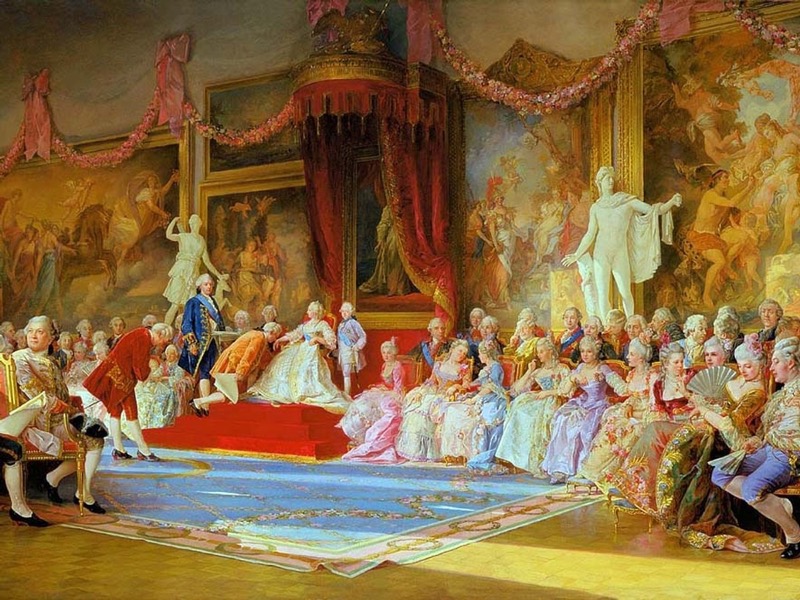
Catherine’s rules for behavior for all entering these doors

  • Leave all ranks outside, likewise hats, and particularly swords.
  • Orders of precedence and haughtiness, or anything however similar, must be left at the door.
  • Be merry, but neither damage nor break anything, nor gnaw on anything.
  • Be seated, stand, walk, as you see fit, regardless of others.
  • Speak with moderation and not too loudly, that those present not have an earache or headache.
  • Argue without anger or passion.
  • Do not sigh or yawn, and do not bore or fatigue anyone.
  • Others should join in any innocent fun that someone thinks up.
  • Eat well, but drink with moderation, that each can always find his legs upon going out the door.
  • Disputes shall not be taken outside the izba† and what goes in one ear should go out the other before one steps through the doors.
Continue reading “Catherine’s rules for behavior for all entering these doors”

独行道, Leið sjálfstæðismanna

時代、時代の道は外さない

Accept things as they are, not what you want them to be

自分の楽しみやトクを考えない

Seek not pleasure for its own sake

どんなことにも依存心を持たない

Avoid likes and dislikes

自分のことより、世のことを深く思う

Think lightly of yourself and deeply of the world

生涯、欲望にとらわれない

Detach from desire

自分のしたことは、後悔しない

Avoid regret

善悪の判断に、他人を妬む心は挟まない

Avoid jealousy

違う道を選んだ人との別れや、心離れを悲しまない

Do not be saddened by separation

Continue reading “独行道, Leið sjálfstæðismanna”