Le Système des objets, into the domestic universe

家具変わる、 空間舞う風、 心の踊り。

The Modern Object Liberated in Function

The style of furniture changes as the individual’s relationships to family and society change. Corner divans and beds, coffee tables, shelving – a plethora of new elements are now supplanting the traditional range of furniture. The organization of space changes, too, as beds become day-beds and sideboards and wardrobes give way to built-in storage. Things fold and unfold, are concealed, appear only when needed. Naturally such innovations are not due to free experiment: for the most part the greater mobility, flexibility and convenience they afford are the result of an involuntary adaptation to a shortage of space – a case of necessity being the mother of invention. Whereas the old-fashioned dining-room was heavily freighted with moral convention, ‘modern’ interiors, in their ingeniousness, often give the impression of being mere functional expedients. Their ‘absence of style’ is in the first place an absence of room, and maximum functionality is a solution of last resort whose outcome is that the dwelling-place, though remaining closed to the outside, loses its internal organization. Such a restructuring of space and the objects in it, unaccompanied by any reconversion, must in the first instance be considered an impoverishment.

The modern set of furniture, serially produced, is thus apparently destructured yet not restructured, nothing having replaced the expressive power of the old symbolic order. There is progress, nevertheless: between the individual and these objects, which are now more supple in their uses and have ceased to exercise or symbolize moral constraint, there is a much more liberal relationship, and in particular the individual is no longer strictly defined through them relative to his family. Their mobility and multi-functionality allow him to organize them more freely, and this reflects a greater openness in his social relationships. This, however, is only a partial liberation. So far as the serial object is concerned, in the absence of any restructuring of space, this ‘functional’ development is merely an emancipation, not (to go back to the old Marxian distinction) a liberation proper, for it implies liberation from the function of the object only, not from the object itself. Consider a nondescript, light, foldable table or a bed without legs, frame or canopy – an absolute cipher of a bed, one might say: all such objects, with their ‘pure’ outlines, no longer resemble even what they are; they have been stripped down to their most primitive essence as mere apparatus and, as it were, definitively secularized. What has been liberated in them – and what, in being liberated, has liberated something in man (or rather, perhaps, what man, in liberating himself, has liberated in them) – is their function. The function is no longer obscured by the moral theatricality of the old furniture; it is emancipated now from ritual, from ceremonial, from the entire ideology which used to make our surroundings into an opaque mirror of a reified human structure. Today, at last, these objects emerge absolutely clear about the purposes they serve. They are thus indeed free as functional objects – that is, they have the freedom to function, and (certainly so far as serial objects are concerned) that is practically the only freedom they have.

Continue reading “Le Système des objets, into the domestic universe”

ism, n.

A form of doctrine, theory, or practice having, or claiming to have, a distinctive character or relation: chiefly used disparagingly, and sometimes with implied reference to schism.

Etymology: Representing French -isme, Latin -ismus, < Greek -ισμός, forming nouns of action from verbs in -ίζειν, e.g. βαπτίζειν to dip, baptize, βαπτισμός the action of dipping, baptism. An allied suffix was -ισμα(τ-), which more strictly expressed the finished act or thing done, and which in some cases is the source of modern -ism. Besides its free use as a suffix forming verbs on ordinary nouns and adjectives, -ίζειν was (as mentioned under -ize suffix) affixed to national names, with the sense to act or ‘play’ the people in question, and hence to act like, do after the manner of, practise the habits, customs, or language of, side with or adhere to the party of, those people. Hence the noun in -ισμός had the sense of acting or doing like, siding with, adhesion to, or speaking like the people in question; e.g. Ἀττικίζειν to Atticize, to side with the Athenians, to use the Attic dialect; hence Ἀττικισμός, Atticism, a siding with Athens, Attic style of language, etc. The Septuagint (Esther viii. 17) and New Testament have Ἰουδαίζειν to Judaize, to live like the Jews. The derivative Ἰουδαισμός Judaism, the manner of the Jews, occurs in the Septuagint (2 Macc. ii. 21). The Latin Jūdaismus occurs in Tertullian (c200); Jūdaizāre in the Vulgate. Origen (a250) has Χριστιανίζειν to play the Christian, act the part of a Christian, practise Christian principles, and Justin Martyr (a150) has Χριστιανισμός the practice of Christians, Christianity. Hence late Latin chrīstiānizāre in Tertullian, chrīstiānismus in Tertullian, Augustine and Jerome. On the type of these, -ισμός, -ismus, became the ordinary ending to form names of religious, ecclesiastical, or philosophical systems; thus pāgānismus is cited by Du Cange from a council of 744. The Old French representation of this, paienisme, paienime, painime (12th cent.) is probably the earliest French example, and appears in English as painime, painim in the 13th cent. But, in the modern form and sense, Judaisme is found a1500, and christianisme (a1500 in French) c1525 in English. From the 16th cent. such formations are numerous.

1680 E. Pettit Vision of Purgatory 46 He was the great Hieroglyphick of Jesuitism, Puritanism, Quaquerism, and of all Isms from Schism. 1756 Monthly Rev. 14 359 Arianism, Socinianism, Arminianism, or any other ism. 1789 H. Walpole Lett. 4 Nov. Alas! you would soon squabble about Socianism, or some of those isms. 1808 R. Southey Select. from Lett. (1856) II. 182 It has nothing to do with Calvinism nor Arminianism, nor any of the other isms. 1811 T. J. Hogg Life Shelley (1858) I. 373 He is nothing,—no ‘ist’, professes no ‘-ism’ but superbism and irrationalism. 1820 R. Polwhele Introd. Lavington’s Enthus. Method. & Papists 118 It has no connection with Methodism, or Puritanism, or any ism or schism. 1820 T. Carlyle Let. to M. Allen Oct. I expect much pleasure from talking over old bygone things, from discussing Spürzheimism, Whiggism, Church of Englandism, and all other imaginable ‘isms’. 1840 Fraser’s Mag. 21 702 All the untidy isms of the day shall be dissipated. 1843 T. Carlyle Past & Present ii. xv. 158 This is Abbot Samson’s Catholicism of the Twelfth Century;—something like the Ism of all true men in all true centuries, I fancy. 1864 J. R. Lowell Rebellion in Prose Wks. (1890) V. 138 That class of untried social theories which are known by the name of isms. 1884 Kendal Mercury 3 Oct. 4/7 The principles on which Education Acts are based, irrespective of isms and creeds. 1928 G. B. Shaw Intell. Woman’s Guide Socialism lxxxiii. 447 The proletarian Isms are very much alike. 1968 S. C. Hutchison Hist. Royal Acad. xvii. 183 He saw no place in art for abstractions and ‘isms’ and had a very low opinion of their adherents. 1974 Listener 14 Feb. 220/1 Impressionism became the most successful ‘ism’ in the history of art.

初め無き
終わり亦無き
我は無し

(Beginning is nothing
Ending is also nothingness
I am nothingness.
)

Abnormalism, abolitionism, aboriginalism, absenteeism, absolutism, academicalism, academicism, accidentalism, achromatism, acosmism, acrobatism, acotism, actinism, activism, Adamitism, adiaphorism, adoptianism, Adopttionism, adventurism, aeroembolism, aerotropism, aestheticism, Africanism, ageism, agnosticism, agrarianism, Albigensianism, albinism, albinoism, alcoholism, algorism, alienism, allelomorphism, allotropism, alpinism, altruism, amateurism, Americanism, ametabolism, amoralism, amorism, amorphism, anabaptism, anabolism, anachronism, anagrammatism, anarchism, anastigmatism, androdioecism, andromonoecism, aneurism, Anglicanism, anglicism, Anglo-Catholicism, aniconism, animalism, animatism, animism, annihilationism, antagonism, anthropomorphism, anthropomorphitism, anthropopathism, anthropophuism, anthropopsychism, antichristianism, anticivism, anticlericalism, antidisestablishmentarianism, anti-federalism, anti-Gallicanism, anti-Jacobinism, antinomianism, antiochianism, antiquarianism, anti-Semitism, antisepticism, antisocialism, antitheism, antitrinitarianism, antivaccinationism, antivivisectionism, anythingarianism, apheliotropism, aphorism, apism, aplanatism, apochromatism, apogeotropism, apoliticism, Apollinarianism, apostolicism, apriorism, Arabism, Aramaism, Arcadianism, archaicism, archaism, Arianism, aristocratism, Aristotelianism, Aristotelism, Arminianism, asceticism, asepticism, Asiaticism, aspheterism, asteism, asterism, astigmatism, asynchronism, asystolism, atavism, atheism, athleticism, Atlanticism, atomism, atonalism, atropism, Atticism, attorneyism, Augustinianism, Australianism, authorism, authoritarianism, autism, autochthonism, autoeroticism, autoerotism, automatism, automobilism, automorphism, autotheism, avant-gardism, Averrhoism, Averroism,

Continue reading “ism, n.”

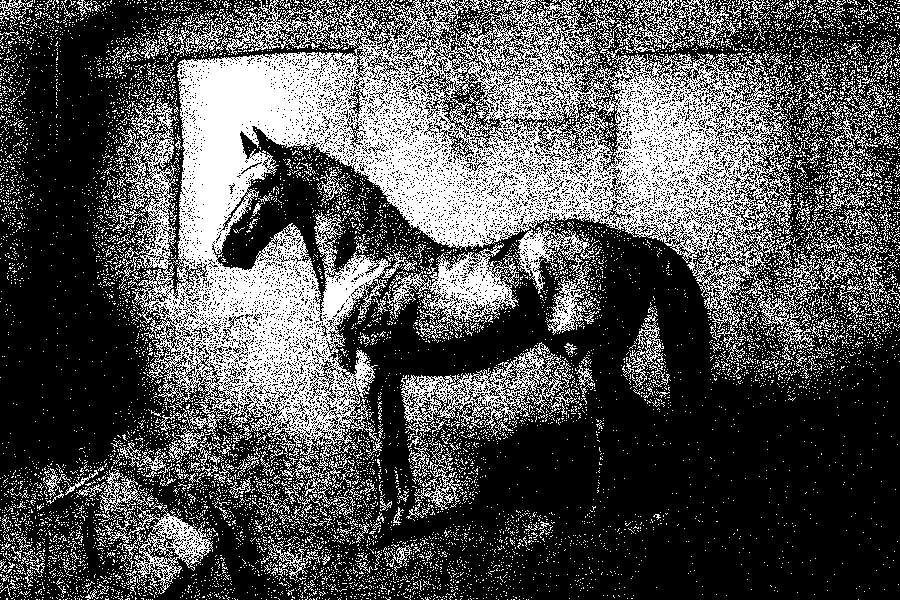
廃屋の馬

荒屋に馬 忘れられた場所 静寂の中, 足音に声 馬のみ耳を垂れ 静かな夜, かすかな囁き 聴きわたる静寂に 遠い思い出, 壁と床 きしむ余韻に 馬の立つ, 馬は知る 忘れられた場所を 時の果てまで

il y avait autrefois une vieille maison abandonnée, perdue dans les bois, que personne ne visitait plus. la porte de la maison grinçait dans le vent, le toit était fissuré et laissait passer la pluie. pourtant, dans cette maison abandonnée, il y avait un secret. un cheval y vivait, silencieux et immobile, gardant ce lieu oublié depuis des années. un soir, alors qu’il faisait noir, un promeneur passa par cette maison et entendit un murmure. il regarda autour de lui, mais il n’y avait personne d’autre que lui et le cheval. le cheval dressa les oreilles et écouta attentivement. il était le seul à percevoir les murmures dans la maison. il se souvenait des temps passés, des voix et des pas qui avaient parcouru la maison. mais maintenant, tout était silencieux. au fil des ans, la maison avait continué à se détériorer et à pourrir, mais le cheval restait, sans savoir pourquoi il devait rester là. cependant, il continuait à veiller sur cette maison, dans l’obscurité, dans le silence et la solitude.

The Country Boy

Soy el tigre.
Te acecho entre las hojas anchas como lingotes
de mineral mojado.
El río blanco crece bajo la niebla. Llegas.
Desnuda te sumerges. Espero.

THE CHILEAN FOREST

Under the volcanoes, beside the snow-capped mountains, among the huge lakes, the fragrant, the silent, the tangled Chilean forest … My feet sink down into the dead leaves, a fragile twig crackles, the giant rauli trees rise in all their bristling height, a bird from the cold jungle passes over, flaps its wings, and stops in the sunless branches. And then, from its hideaway, it sings like an oboe … The wild scent of the laurel, the dark scent of the boldo herb enter my nostrils and flood my whole being … The cypress of the Guaitecas blocks my way … This is a vertical world: a nation of birds, a plenitude of leaves … I stumble over a rock, dig up the uncovered hollow, an enormous spider covered with red hair stares up at me, motionless, as huge as a crab … A golden carabus beetle blows its mephitic breath at me, as its brilliant rainbow disappears like lightning … Going on, I pass through a forest of ferns much taller than I am: from their cold green eyes sixty tears splash down on my face and, behind me, their fans go on quivering for a long time … A decaying tree trunk: what a treasure!… Black and blue mushrooms have given it ears, red parasite plants have covered it with rubies, other lazy plants have let it borrow their beards, and a snake springs out of the rotted body like a sudden breath, as if the spirit of the dead trunk were slipping away from it … Farther along, each tree stands away from its fellows … They soar up over the carpet of the secretive forest, and the foliage of each has its own style, linear, bristling, ramulose, lanceolate, as if cut by shears moving in infinite ways … A gorge; below, the crystal water slides over granite and jasper … A butterfly goes past, bright as a lemon, dancing between the water and the sunlight … Close by, innumerable calceolarias nod their little yellow heads in greeting … High up, red copihues (Lapageria rosea) dangle like drops from the magic forest’s arteries … The red copihue is the blood flower, the white copihue is the snow flower … A fox cuts through the silence like a flash, sending a shiver through the leaves, but silence is the law of the plant kingdom … The barely audible cry of some bewildered animal far off … The piercing interruption of a hidden bird … The vegetable world keeps up its low rustle until a storm churns up all the music of the earth.

Anyone who hasn’t been in the Chilean forest doesn’t know this planet.

I have come out of that landscape, that mud, that silence, to roam, to go singing through the world.

Continue reading “The Country Boy”

A Man in Love, … next year I shall plant some Tomatoes

Walking down a narrow street one evening, I stole a melon. The fruit seller, who was lurking behind his fruit, caught me by the arm.

Miss, I’ve been waiting for a chance like this for forty years. For forty years I’ve hidden behind this pile of oranges in the hope that somebody might pinch some fruit. And the reason for that is this: I want to talk, I want to tell my story. If you don’t listen, I’ll hand you over to the police.

I’m listening, I told him.

Continue reading “A Man in Love, … next year I shall plant some Tomatoes”

The topographical and anatomical information in particular is lost on me … I see nothing. It’s because there is nothing.

I see nothing. It’s because there is nothing. Or it’s because I have no eyes. Or both. (That makes three possibilities, to choose from.) But do I really see nothing? It’s not the moment to tell a lie. But how can you not tell a lie? What an idea!

A voice like this, who can check it? It tries everything. It’s blind, it seeks me blindly, in the dark. It seeks a mouth, to enter into. Who can query it? There is no other. (You’d need a head? you’d need things? I don’t know. I look too often as if I knew. It’s the voice does that: it goes all knowing, to make me think I know, to make me think it’s mine.)

It has no interest in eyes. It says I have none, or that they are no use to me. Then it speaks of tears. Then it speaks of gleams. It is truly at a loss. Gleams? Yes: far or near. (Distances: you know, measurements. Enough said?) Gleams, as at dawn. Then dying, as at evening. Or flaring up – they do that too: blaze up more dazzling than snow, for a second (that’s short!), then fizzle out.

That’s true enough?

If you like: one forgets, I forget. I say I see nothing, or I say it’s all in my head (as if I felt a head on me!). That’s all hypotheses, lies. These gleams too: they were to save me, they were to devour me. That came to nothing. I see nothing (either because of this or else on account of that). And these images at which they watered me, like a camel, before the desert? I don’t know. More lies, just for the fun of it? (Fun! What fun we’ve had! What fun of it!) All lies? (That’s soon said – you must say soon, it’s the regulations.)

The place. I’ll make it all the same. I’ll make it in my head, I’ll draw it out of my memory, I’ll gather it all about me. (I’ll make myself a head, I’ll make myself a memory.) I have only to listen: the voice will tell me everything (tell it to me again), everything I need – in dribs and drabs, breathless.

Continue reading “The topographical and anatomical information in particular is lost on me … I see nothing. It’s because there is nothing.”

To dream burnished surfaces are a figuration and promise of the infinite … how little we know

The Library of Babel

The Universe, which others call the Library, is composed of an indefinite, perhaps infinite number of hexagonal galleries. In the center of each gallery is a ventilation shaft, bounded by a low railing. From any hexagon one can see the floors above and below—one after another, endlessly. The arrangement of the galleries is always the same: Twenty bookshelves, five to each side, line four of the hexagon’s six sides; the height of the bookshelves, floor to ceiling, is hardly greater than the height of a normal librarian.

One of the hexagon’s free sides opens onto a narrow sort of vestibule, which in turn opens onto another gallery, identical to the first— identical in fact to all. To the left and right of the vestibule are two tiny compartments. One is for sleeping, upright; the other, for satisfying one’s physical necessities (otro, satisfacer las necesidades fecales). Through this space, too, there passes a spiral staircase, which winds upward and downward into the remotest distance. In the vestibule there is a mirror, which faithfully duplicates appearances. Men often infer from this mirror that the Library is not infinite—if it were, what need would there be for that illusory replication? I prefer to dream that burnished surfaces are a figuration and promise of the infinite…. Light is provided by certain spherical fruits that bear the name “bulbs.” There are two of these bulbs in each hexagon, set crosswise. The light they give is insufficient, and unceasing.

Like all the men of the Library, in my younger days I traveled; I have journeyed in quest of a book, perhaps the catalog of catalogs. Now that my eyes can hardly make out what I myself have written, I am preparing to die, a few leagues from the hexagon where I was born. When I am dead, compassionate hands will throw me over the railing; my tomb will be the unfathomable air, my body will sink for ages, and will decay and dissolve in the wind engendered by my fall, which shall be infinite. I declare that the library is endless. Idealists argue that the hexagonal rooms are the necessary shape of absolute space, or at least of our perception of space. They argue that a triangular or pentagonal chamber is inconceivable.

(Mystics claim that their ecstasies reveal to them a circular chamber containing an enormous circular book with a continuous spine that goes completely around the walls. But their testimony is suspect, their words obscure. That cyclical book is God.) Let it suffice for the moment that I repeat the classic dictum: The Library is a sphere whose exact center is any hexagon and whose circumference is unattainable. Each wall of each hexagon is furnished with five bookshelves; each bookshelf holds thirty- two books identical in format; each book contains four hundred ten pages; each page, forty lines; each line, approximately eighty black letters. There are also letters on the front cover of each book; those letters neither indicate nor prefigure what the pages inside will say. I am aware that that lack of correspondence once struck men as mysterious. Before summarizing the solution of the mystery (whose discovery, in spite of its tragic consequences, is perhaps the most important event in all history), I wish to recall a few axioms.

Continue reading “To dream burnished surfaces are a figuration and promise of the infinite … how little we know”